
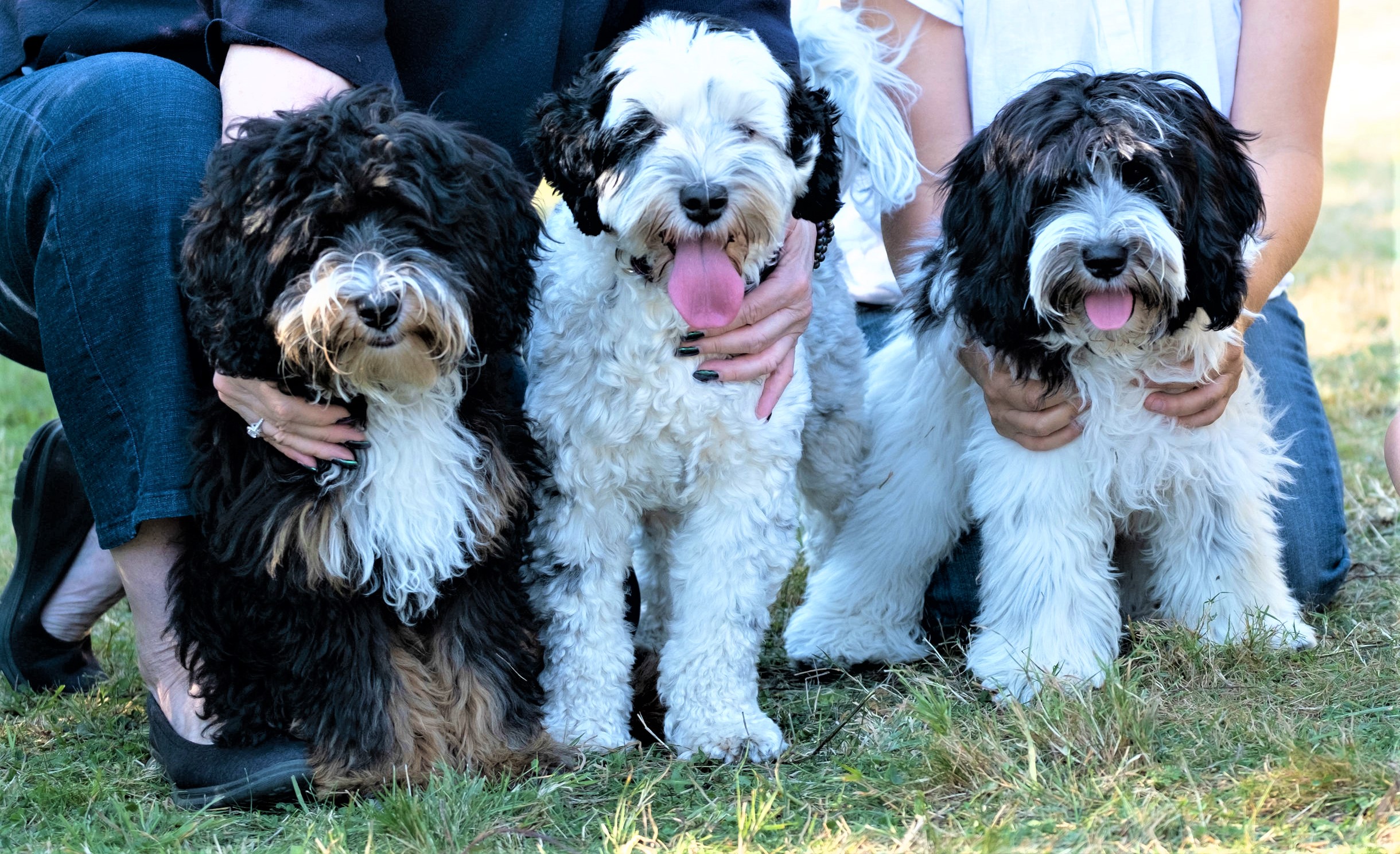
Ask five people what an Australian Labradoodle is and you may receive five different answers.
It is a Labrador crossed with a Poodle. It is any multigenerational doodle. The word Australian means Australian Shepherd. It cannot be a breed because the Canadian Kennel Club does not recognise it. All doodles are essentially the same anyway.
None of those answers is accurate.
An Australian Labradoodle, commonly shortened to ALD, is a deliberately developed, multigenerational dog population bred from documented lines toward a shared standard for temperament, coat, structure and health. The established Australian Labradoodles most families encounter today have two registered Australian Labradoodle parents. Carefully controlled foundation breeding can still introduce approved origin dogs to preserve genetic diversity, but those descendants are identified and graded accordingly.
The word Australian refers to where the breed was developed. There is no Australian Shepherd in the accepted Australian Labradoodle pedigree.
The name may be rather silly. The dog it has come to describe is not.
The Short Answer
Here is the simplest way to separate the terms.
| Term | What it means |
| Labrador–Poodle cross | One Labrador Retriever parent and one Poodle parent |
| F1 Labradoodle | The first generation of that Labrador–Poodle cross |
| F1B Labradoodle | An F1 Labradoodle bred back to a Poodle, usually producing approximately 75 per cent Poodle ancestry |
| Multigenerational Labradoodle | Successive generations developed only from Labrador and Poodle lines. “Multigenerational” alone does not make the dog an Australian Labradoodle |
| Australian Labradoodle | A documented population developed over generations from approved foundation ancestry and bred toward an established Australian Labradoodle standard |
| Other doodles | Separate crosses such as Goldendoodles, Bernedoodles, Aussiedoodles and Cockapoos. They have different ancestry, traits and breeding histories |
An Australian Labradoodle is therefore not simply a Labradoodle that was born in Australia, nor is it a more expensive name for any Labrador–Poodle cross.
Before Wally Conron
The familiar history usually begins in Australia in 1989 with Wally Conron and a guide-dog experiment. The real history begins earlier.
British land and water speed record holder Donald Campbell owned a black, curly-coated Labrador–Poodle cross named Maxie. Campbell had owned him since puppyhood in 1949 and referred to him as a “Labradoodle” in his 1955 autobiography, Into the Water Barrier.
That is the earliest documented published use of the word we have found. It means Wally Conron did not invent the name, although he may have arrived at it independently many years later.
Maxie also reminds us that people had crossed Labradors and Poodles before anyone attempted to build a programme or establish a breed. A cross can exist long before someone begins the much larger work of developing a predictable population.
Read the passage from Campbell’s autobiography in WALA’s breed history.
What Wally Actually Did
In 1989, Wally Conron was breeding manager for the Royal Guide Dogs Association of Australia, now Guide Dogs Victoria. The association received a request from a visually impaired woman in Hawaii who needed a guide dog that would not aggravate her husband’s allergies.
After testing a number of Poodles without finding a suitable match for the household, Conron bred Brandy, a Labrador Retriever, to Harley, a Standard Poodle owned by the association’s guide-dog services manager. The litter produced three puppies: Sultan, Simon and Sheik.
Coat and saliva samples from the three puppies were sent to Hawaii. Only Sultan proved compatible with the husband’s particular allergies. He also had the strongest temperament for the intended placement and was trained as the woman’s guide dog.
It is an interesting and worthwhile experiment. It is not proof that an entire future breed was naturally destined for service work. A litter of three puppies is far too small to establish a breed-wide behavioural aptitude. Sultan’s success demonstrated that one dog could combine guide-dog suitability with allergy compatibility for one household.
Conron later said the other two puppies also appeared capable of becoming guide dogs, but families were reluctant to take them because they were crosses. At that time, an intentionally purchased dog was generally expected to be a recognised purebred. Crosses were commonly regarded as accidental, unrecorded and unpredictable, even though many excellent farm and working dogs were crosses.
The association’s publicity department began describing the puppies as a special new breed called the Labradoodle. That reframing changed the public response.
Conron later called the naming a “gimmick”, but context matters. The Guide Dog Association was trying to overcome resistance to placing or raising crossbred guide-dog candidates. It was not establishing a private puppy business and Conron did not commercialise the Labradoodle as a pet-dog industry.
What changed was not merely the sound of the word. The puppies went from being perceived as mixed-breed dogs to purpose-bred dogs with a credible story. The name made the story memorable. The guide-dog association gave it legitimacy.
From Publicity to a Market
Conron and the Guide Dog Association publicised the cross. Private breeders commercialised it.
Once people heard about a dog associated with intelligence, trainability and a potentially low-shedding coat, demand moved far beyond the guide-dog community. Breeders began producing Labrador–Poodle crosses for the pet market. Other breeders crossed Poodles with Golden Retrievers, Cocker Spaniels, Cavalier King Charles Spaniels, Bernese Mountain Dogs and almost anything else that could be followed by “doodle” or “poo”.
The word doodle gradually became consumer shorthand for a promise: a clever, friendly, fluffy family dog that would leave less hair around the home.
Sometimes that promise was supported by thoughtful breeding. Often it was not.
An F1 cross can inherit any combination of traits from its two parents. Breeding an F1 back to a Poodle may make a furnished, lower-shedding coat more likely, but it does not automatically create predictable structure, health or temperament. Calling later crosses “multigen” also tells us very little unless we know which dogs were used, what was selected and whether anyone maintained reliable records.
That remains one of the greatest problems in the doodle world. The name describes the parentage, but it does not tell us the quality of the breeding programme.
Developing the Australian Labradoodle
Rutland Manor, operated by Beverley Manners, and Tegan Park, operated by her daughter Mellodie Woolley, became central to the early development and international distribution of what came to be called the Australian Labradoodle.
They moved beyond repeatedly producing first-generation Labrador–Poodle crosses. They bred successive generations, selected for particular coats, sizes, temperaments and appearances and introduced additional dogs to broaden or alter the developing population. Historical Australian Labradoodle records include Poodles of different sizes, Labrador Retrievers, English and American Cocker Spaniels and, in some accounts, Irish Water Spaniels and Curly-Coated Retrievers.
Not every historically reported breed has left a detectable genetic contribution in the modern population. A 2020 genomic study of 21 Australian Labradoodles found that the dogs were predominantly Poodle in ancestry, retained much less Labrador ancestry and had small amounts of Cocker Spaniel ancestry in some lines. The study did not detect an Irish Water Spaniel contribution in the sampled dogs. That does not prove it was never used. It means its contribution was not detectable in that limited sample.
Rutland Manor and Tegan Park deserve credit for helping turn a type of cross into a selected, internationally distributed population. That contribution does not place their programmes beyond scrutiny.
The Difficult Part of the History
Early Australian Labradoodle development was controlled largely by private breeding operations before today’s registry practices, parentage testing and shared databases existed. Valuable breeding dogs were exported around the world while the definitions, grading systems and governing organisations were still being created.
Some very old pedigrees contain gaps. Breeders working through that period report that some owners of kennel-club Labradors and Poodles would permit their dogs to be used but would not allow the registered name to appear in a crossbred pedigree. Their kennel-club rules, contracts or standing could be jeopardised if registered stock was knowingly used outside the recognised breed. This can explain some unnamed Labrador or Poodle entries in the distant generations of an ALD pedigree.
It cannot explain every discrepancy and it should not be used as a blanket excuse. A blank is not proof of fraud, but neither is it proof that the missing information was accurate. Modern registries have to preserve what can be documented, identify uncertainty honestly and avoid turning an assumption into a fact merely because it has been repeated for years.
There is also a long-running public dispute about the accuracy of some Rutland Manor and Tegan Park pedigrees. Australian Labradoodle registries and breeders have challenged undisclosed or incorrectly identified ancestry in early records. Beverley Manners has made the opposite allegation, arguing that later registries inserted Cockapoos and other information into pedigrees she supplied. There is no complete, independent master archive capable of reconciling every competing claim. Pretending otherwise would replace one piece of lore with another.
Breeders call knowingly assigning false parentage or ancestry to a dog “hanging papers”. It is a serious allegation, not a colourful synonym for an incomplete record. The evidence supports telling readers that pedigree disputes exist and explaining why modern verification matters. It does not support declaring every contested entry proven one way or the other.
That uncertainty is not a reason to abandon the breed. It is the reason modern pedigree transparency matters.
Cobberdogs Are a Separate Programme
The clearest documented division occurred when the Rutland programme introduced Irish Soft-Coated Wheaten Terrier ancestry that established Australian Labradoodle organisations did not accept within their breed definition. Manners says this herself. Master Dog Breeders and Associates, or MDBA, accepted her new programme in 2012 under a new name: the Australian Cobberdog.
This was not a simple renaming of the Australian Labradoodle. It was a split. Manners’ Cobberdog programme retained ancestry shared with early ALDs, accepted an infusion the ALD organisations rejected and moved under a different breed definition and a different stud book. Manners now argues publicly that Cobberdogs are a recognised breed while Australian Labradoodles are corrupted crossbreds. ALD organisations and professional ALD breeders reject that account and continue to steward the Australian Labradoodle as its own developing breed population.
The words accepted and recognised need context here. MDBA is an active Australian private company and operates its own pedigree registry. Manners states that she contracted with MDBA to give it the sole global right to register, develop and protect the Cobberdog. Australian government records also show that MDBA Pty Ltd holds the Australian Cobberdog Club business names. Those club names sit under the same private company as the registry rather than representing outside recognition from independent national breed bodies. Acceptance by that privately operated system is not recognition by Dogs Australia, the Fédération Cynologique Internationale or the Canadian Kennel Club. Nor is it independent recognition by the Australian Labradoodle organisations from which the Cobberdog programme separated.
That governance model is materially different from the ALD world, where several independent organisations maintain standards, databases and breeder communities across countries. The system is imperfect and the organisations do not agree on every rule, but no single founder or private company owns the Australian Labradoodle’s identity.
A Cobberdog may be a lovely dog. It is still not an Australian Labradoodle and an MDBA Cobberdog registration is not equivalent to registration with an established ALD organisation. Buyers deserve to understand that difference instead of being asked to accept the circular argument that the Cobberdog is a recognised breed because the private registry holding its sole stud-book rights has recognised it.
Read Manners’ current account of the split and the Australian Business Register record for MDBA Pty Ltd and its Cobberdog club business names.
We do not need to erase Rutland Manor and Tegan Park’s contribution or turn a complicated history into a personal attack. We do need to distinguish historical contribution from present-day authority. A breed needs accurate pedigrees, shared standards, independent oversight and collective responsibility.
The Terminology Problem
Australian Labradoodle terminology is confusing partly because different organisations have used different grading systems over time. The abbreviation ALD also does double duty. It can mean the Australian Labradoodle population as a whole or one specific level within a grading system.
GALA’s current pedigree guide separates Labrador–Poodle lines from Australian Labradoodle development.
Labradoodle Origin
Labradoodle Origin, commonly abbreviated LO, describes dogs whose ancestry contains only Labrador Retrievers and Poodles.
- LO-F1: Labrador Retriever × Poodle
- LO-F1B: F1 Labradoodle × Poodle
- LO-F2 and later LO generations: Continued combinations of Labradoodle Origin dogs
- LO Multigen: Multiple generations of Labrador–Poodle-derived dogs
These dogs can be thoughtfully bred and make excellent companions. They are still Labrador–Poodle lines, not Australian Labradoodles merely because several generations have passed.
Foundation Australian Labradoodle
A Foundation ALD is created when approved origin or parent-breed ancestry is introduced into an Australian Labradoodle line. Depending on the approved programme, this may include Labrador Retriever, Poodle, Cocker Spaniel, Cockapoo or Spanador ancestry.
Foundation does not mean inferior or illegitimate. It means the pedigree contains a more recent introduction that must remain visible while breeders evaluate and stabilise the results.
The six historically approved parent breeds are the Labrador Retriever, Poodle, English Cocker Spaniel, American Cocker Spaniel, Irish Water Spaniel and Curly-Coated Retriever. They were not added at random. Each was intended to solve a problem or strengthen a quality and each could also introduce traits breeders did not want to retain.
| Foundation breed | What breeders wanted from it | What careful selection must manage |
| Labrador Retriever | Cooperative, people-oriented temperament, retrieving instinct, athleticism, substance and the ability to work and play with a family | A shedding double coat, larger size, heavier structure and exuberance that can become too much for some homes |
| Poodle | Low-shedding furnishings, intelligence, trainability, athleticism and a useful range of sizes | A coat that can become too dense or tightly curled, finer structure and excessive sensitivity or watchfulness if those traits are repeatedly concentrated |
| English and American Cocker Spaniels | Smaller size, bone and substance in miniature dogs and an affectionate, engaging companion temperament | Domed heads, long or heavy ears, shedding coats and a line that begins to look and behave more like a spaniel than a retriever-derived ALD |
| Irish Water Spaniel | Rich chocolate colour while retaining a low-shedding water-dog coat | Its actual contribution is difficult to quantify and was not detectable in the small group of modern ALDs included in the 2020 genomic study |
| Curly-Coated Retriever | A stronger retriever contribution and working athleticism | An open or sparsely furnished face and a more aloof temperament, both identified as traits to breed away from |
A Cockapoo is a Cocker Spaniel crossed with a Poodle. A Spanador, in this terminology, is a Cocker Spaniel crossed with a Labrador Retriever. They are not two more pure parent breeds. They are foundation crosses that package ancestry from the approved breeds. A Cockapoo can efficiently bring smaller size, furnishings and spaniel substance into a line. A Spanador can combine Labrador retrieving qualities with smaller, stockier Cocker influence. Both also bring the less desirable possibilities of their component breeds, including shedding, long ears, excessive spaniel type or a shift away from the Labrador character.
The original Cocker contribution was meant to be a splash in a Labrador–Poodle-derived population, not a destination. Repeated Cockapoo use can produce a pedigree dominated by Cocker Spaniel and Poodle while the dog is still marketed under the Australian Labradoodle name. That is why the number, timing and visibility of foundation introductions matter.
Australian Labradoodle
Within the grading system, an ALD results from combinations such as Foundation ALD to Foundation ALD, Foundation ALD to ALD or Foundation ALD to Multi-generation ALD.
Multigenerational Australian Labradoodle
A Multi-generation ALD, often shortened to MALD, results from established ALD-to-ALD combinations:
- ALD × ALD
- ALD × Multi-generation ALD
- Multi-generation ALD × Multi-generation ALD
MALD therefore means Multi-generation Australian Labradoodle. In GALA’s system it is a pedigree grade, not a decorative way of saying that a dog has many generations behind it. A dog with sufficiently recent or repeated foundation ancestry can be returned to the Foundation ALD grade even if many of its other ancestors are MALDs.
This is why saying that F1, F1B and multigen all describe Australian Labradoodles is misleading. F1 and F1B describe early Labrador–Poodle crosses. “Multigen” can describe either a multigenerational Labrador–Poodle line or a multigenerational Australian Labradoodle. The pedigree and registry classification tell us which one it is.
GALA’s current Pedigree Generations and Infusion Guide explains these classifications.
Why the Registry Matters
A breeder does not have to belong to a breed club. Club membership does not automatically make someone ethical, knowledgeable or skilled.
However, without an established registry, the breeder and puppy buyer lose something enormously valuable: an independent, accumulated body of pedigree knowledge.
A serious Australian Labradoodle registry can provide:
- Verified multigenerational pedigrees
- Parentage and DNA records
- Health-testing records across related dogs
- Litter registrations and ownership history
- Relationship information for proposed matings
- Coefficients of inbreeding and pedigree analysis
- A shared breed standard
- Rules governing infusions and generational grading
- Accountability beyond an individual breeder’s own claims
Consumer DNA breed-percentage tests cannot establish whether a dog is an Australian Labradoodle or determine its registry grade. The companies compare a dog with different proprietary reference populations and no standard, validated ALD reference panel exists across them. Results can vary between companies and broad ancestral signals cannot reconstruct the actual sequence of historical matings.
Those tests may be interesting for a dog of genuinely unknown ancestry. For deciding whether a purported ALD is a Foundation ALD, ALD or MALD, they provide no meaningful evidence. Even ALAA cautions that DNA lineage tests cannot validate an Australian Labradoodle pedigree. A detailed registry follows the actual family tree.
Read ALAA’s explanation of why DNA lineage tests cannot authenticate an ALD pedigree.
Papers alone do not make a well-bred dog. They make important claims open to examination.
Why Van Isle Belongs to GALA
Van Isle Doodles belongs to the Global Australian Labradoodle Association because GALA was built with an international scope and a strong emphasis on pedigree clarity, genetic diversity and collaborative breed stewardship. The Australian Labradoodle Association of America has made important contributions to the breed but, as its name suggests, its history and membership focus have been primarily American.
ALAA does have an approval process, health-testing requirements and frequency rules for infusion breeding. The distinction is not that ALAA has no rules. It is that its published grading system does not impose a cumulative lifetime ceiling on the amount of approved Cockapoo or other foundation ancestry that may sit deeper in a pedigree before a later dog can again receive a multigenerational or purebred designation.
Under ALAA’s published scheme, a Cockapoo or Spanador infusion resets the consecutive generation count but the offspring remains an Australian Labradoodle. After enough like-to-like ALD matings, later descendants can again become Multigenerational Australian Labradoodles and eventually Purebred Australian Labradoodles. The scheme limits how frequently the same type of infusion may be made within a short window, but it permits the process to be repeated in later generations. A dog can therefore receive a MALD designation even when its extended pedigree contains numerous separate Cockapoo introductions.
GALA defines MALD more narrowly. It permits approved foundation work because a developing breed needs a responsible way to preserve diversity, but it also places a visible limit on how much recent Cocker-derived ancestry can accumulate while the dog retains an established ALD grade. What matters to us is not pretending that no Cocker was ever used. It is identifying, counting and limiting that ancestry honestly.
Under GALA’s current guide, a dog returns to Foundation ALD status if its six-generation pedigree contains more than two Cockapoo or Spanador introductions or more than one Cocker Spaniel introduction. The recent foundation work remains visible instead of disappearing behind the general term “multigenerational”.
Our concern is not that a Cocker Spaniel was ever used. Cocker ancestry is part of accepted Australian Labradoodle history. The concern is allowing so much recent Cocker–Poodle ancestry into a pedigree that the developing dog begins to resemble what we jokingly call a “Cockadoodle”, while continuing to use the same label as a long-established ALD line.
At Van Isle, preserving a meaningful Labrador influence is an intentional breeding goal. The Labrador contributes much of the social cooperation, retrieving character, athletic confidence and family-dog versatility that we value. The Poodle contribution is indispensable and the Cocker contribution helped solve real developmental problems, but neither should be allowed to erase the Labrador from more than the breed’s name.
Genetic diversity matters. So does breed identity. A thoughtful grading system must protect both.
Read ALAA’s current infusion policy, its published grading scheme and GALA’s current Pedigree Generations and Infusion Guide.
Is the ALD a Real Breed?
This deserves a direct answer.
Yes, the Australian Labradoodle is a deliberately developed breed population. It is also fair, in formal scientific language, to call it a young breed or a “breed in formation”. Those descriptions are not insults. Every established breed passed through a developmental stage.
Canadian Kennel Club recognition is an administrative status. It does not cause a breed to come into existence. A population develops through generations of recorded breeding, shared ancestry, selection toward a standard and the ability to reproduce its defining range of characteristics.
Recognition can provide valuable independent structure and public legitimacy, but lack of CKC recognition does not turn documented ALDs back into random Labrador–Poodle crosses.
The strongest independent evidence comes from the 2020 genomic study. Researchers explicitly distinguished first-generation Labradoodles from the Australian Labradoodle, describing the latter as a planned, true-breeding population developed to meet an established standard. They also called it a young “breed in formation”.
That is a more honest and defensible description than either extreme. The ALD is not a random cross. Nor should we pretend its global stud book has been closed and standardised for hundreds of years.
Read the full PLOS Genetics study.
Predictability Is Not Uniformity
People sometimes point to the range of ALD sizes, colours, coat textures and personalities as proof that the dogs are unpredictable.
That confuses predictability with uniformity.
Predictability means that informed breeders can produce and describe a credible range. We can estimate adult size from parents and pedigree. We can evaluate coat and shedding genes. We can study temperament patterns across relatives. We can select dogs whose structure, health and behaviour support the breed standard.
Uniformity would mean every puppy is virtually interchangeable. That is neither possible nor desirable in living animals.
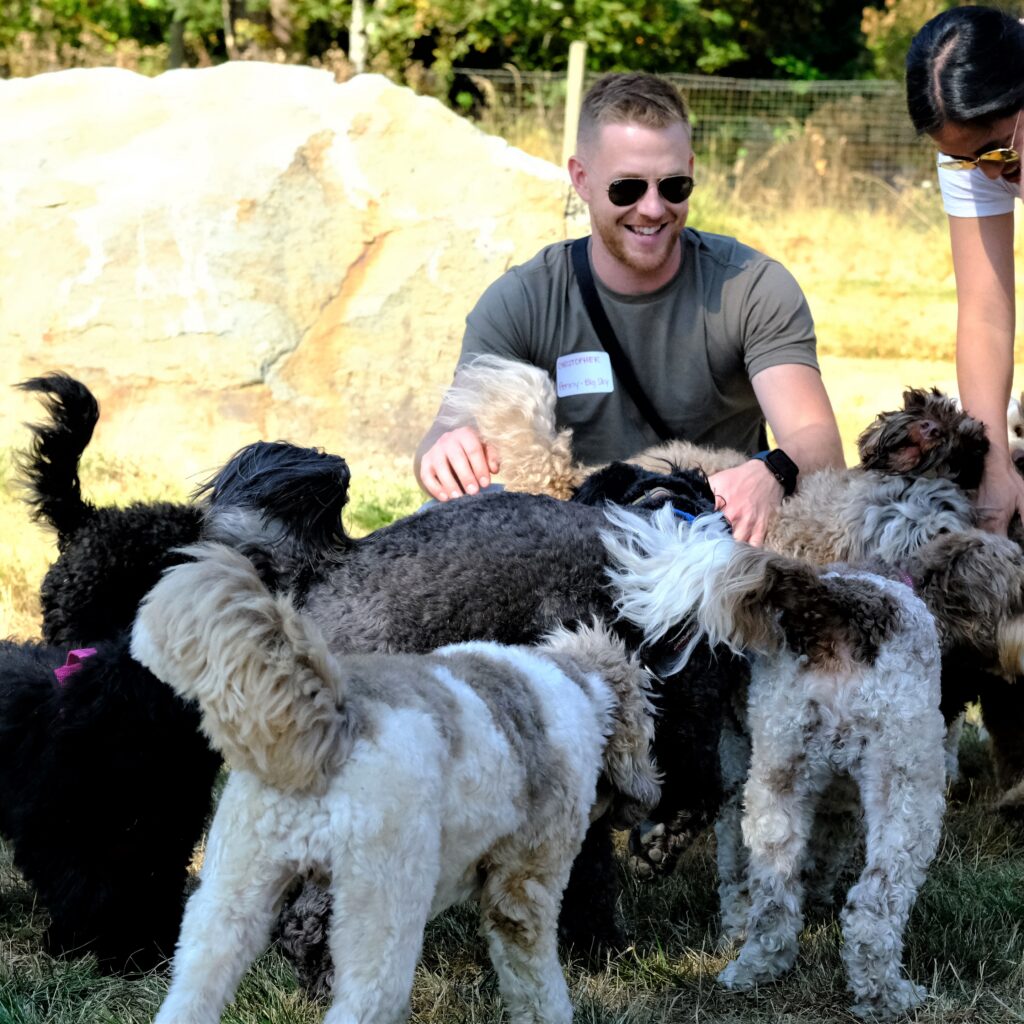
One litter may include a thoughtful puppy who observes before joining in, a socially bold puppy eager to meet everyone and a calmer puppy who prefers to stay close. They can all be recognisably Australian Labradoodle while requiring different homes and different approaches to raising them.
Genes establish possibilities and tendencies. Prenatal conditions, maternal care, early development, learning, health and the family environment all influence how an individual dog expresses them.
Good breeding narrows the range responsibly. It does not eliminate individuality.
Selection Without Losing Diversity
Breeders sometimes criticise the closed stud books and restricted gene pools of established kennel-club breeds, then select their own dogs carefully for a recognisable ALD appearance and temperament. At first glance, that may look contradictory.
It is not. Breed development requires selection.
The objective is not maximum or random diversity. If breeders selected without regard for shared traits, the population would never develop a dependable identity. The goal is to concentrate the characteristics that define the breed while preserving adequate diversity throughout the rest of the genome.
The 2020 genomic research provides an unusually helpful example. The Australian Labradoodles studied showed strong selection around Poodle-derived coat characteristics. At the same time, they had a low mean inbreeding coefficient and relatively high genome-wide diversity compared with the established purebreds in the study.
The sample included only 21 Australian Labradoodles, so it cannot represent every line worldwide. It nevertheless demonstrates that selection for recognisable traits and preservation of broader genetic diversity can occur together.
That is the real challenge for professional ALD breeders: maintain the dog people recognise and love without narrowing the population so severely that health eventually pays the price.
Why People Fell in Love
The word Labradoodle helped the original cross overcome the stigma attached to mixed-breed dogs. It does not fully explain why doodles became a worldwide phenomenon.
People fell in love with the dogs they saw and the life those dogs seemed to offer.
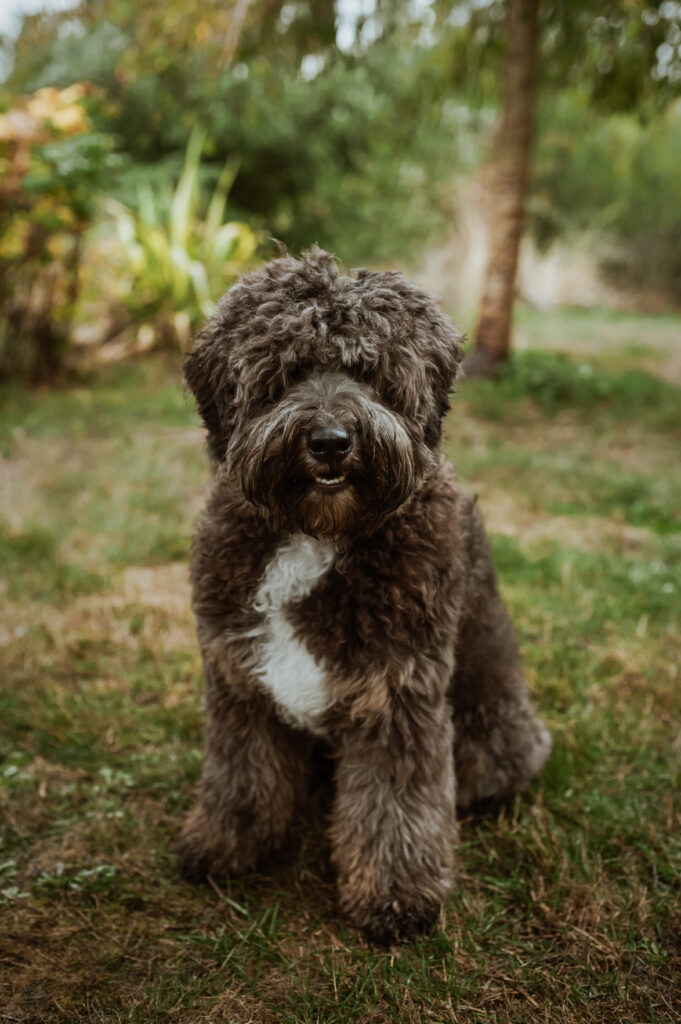
The visual appeal is undeniable. A soft, furnished face with expressive eyes evokes the proportions people associate with teddy bears and youthful animals. The look is friendly without being fragile and playful without being intimidating. It appeals to people who might otherwise choose very different kinds of dogs.
Then there is the practical promise: intelligence, trainability, athleticism and considerably less loose hair around the home. A well-bred ALD can join a family for a hike, swim, run or camping trip, then settle quietly while everyone watches a movie.
Research into doodle ownership supports this combination of motivations. A US survey found that 50 per cent of doodle owners were influenced by appearance when choosing their dog. A large UK study found that designer-cross buyers were especially likely to seek a dog they believed would be allergy-friendly, easy to train, good with children and a suitable size for their lifestyle.
No dog is guaranteed to be safe for every person with allergies and low shedding is not the same as hypoallergenic. Families with dog allergies should spend meaningful time with Australian Labradoodles before committing to a puppy. Still, the combination of an appealing coat and a family-oriented companion temperament clearly helped drive demand.
Read the US doodle-owner study.
Read the UK puppy-buyer study.
What About Service Dogs?
The ALD’s guide-dog origin is historically important. It is not proof that every Australian Labradoodle is naturally suited to service work.
Successful service work requires much more than intelligence or affection. A candidate needs environmental stability, resilience, trainability, sound structure, appropriate energy, the ability to recover from surprises and a strong working relationship with the handler. Many individual dogs from many breeds can possess those qualities.
What later ALD breeders have done is repeatedly select for traits that overlap with successful family, therapy and service work:
- Human orientation without indiscriminate overexcitement
- Responsiveness and willingness to cooperate
- Emotional steadiness
- Sociability
- Adaptability
- Athletic ability paired with an off-switch
- Affection and connection without debilitating separation distress
Australian Labradoodles are often called “Velcro dogs”. At its best, that means a dog who values human proximity, notices communication and wants to participate in family life. It should not mean a dog who panics whenever left alone.
Repeated selection for healthy human connection has helped make the ALD an exceptional family companion and has produced many excellent therapy and service dogs. It does not make every puppy a service prospect, and responsible breeders should never promise that it will.
So, What Is an ALD?
An Australian Labradoodle is not simply a Labrador–Poodle cross with a more impressive name.
It is the result of generations of selection within a documented population, guided by a breed standard and supported by registries that preserve the ancestry and accumulated knowledge behind each dog. It remains a young breed with an open but controlled path for diversity. It also carries a complicated history that should be explained rather than polished into mythology.
Not every breeder belongs to a club. Not every registered dog is an excellent example of the breed. Not every dog advertised as an Australian Labradoodle has the pedigree to support the claim.
The name alone proves very little.
The pedigree, the breeding decisions, the health testing, the temperament of the family behind the puppy and the accountability of the breeder tell the real story.
Frequently Asked Questions
Is an Australian Labradoodle a Labrador crossed with a Poodle?
No. That pairing produces an F1 Labradoodle. An established Australian Labradoodle comes from documented, multigenerational ALD lines. Approved foundation programmes may introduce specified origin dogs under registry rules.
Does “Australian” mean Australian Shepherd?
No. The name refers to the breed’s development in Australia. Australian Shepherds are not an accepted parent breed.
Are F1 and F1B dogs Australian Labradoodles?
No. F1 and F1B describe generations of Labrador–Poodle crossing. They may be registered as Labradoodle Origin dogs but they are not established Australian Labradoodles.
Is every multigenerational Labradoodle an ALD?
No. A dog can have many generations of Labrador and Poodle ancestry and remain a multigenerational Labradoodle. ALD status depends on the documented pedigree and the registry’s Australian Labradoodle grading rules.
Can an ALD be a breed without CKC recognition?
Yes. Recognition is granted to a breed after development. It does not create the underlying population. The ALD has documented ancestry, multigenerational breeding, breed standards and registries, although it remains a relatively young breed in formation.
Are Australian Labradoodles hypoallergenic?
No dog can be guaranteed hypoallergenic. Well-bred ALDs commonly have low-shedding fleece coats and many people with mild dog allergies tolerate them well, but reactions are individual and can involve saliva and dander as well as hair.
Are all Australian Labradoodles suitable as service dogs?
No. The breed contains qualities that can support service and therapy work, but every dog must be evaluated individually. Service suitability depends on temperament, health, structure, resilience, training and the needs of the handler.
Sources and Further Reading
- Worldwide Australian Labradoodle Association: Australian Labradoodle History
- ABC News: The First Ever Labradoodle Was a Guide Dog
- PLOS Genetics: Genetic Analysis of the Modern Australian Labradoodle Dog Breed
- GALA: Pedigree Generations and Infusion Guide
- ALAA: Infusion Breeding Guidelines and Policies
- ALAA: Published Grading Scheme
- ALAA: Why DNA Lineage Tests Cannot Authenticate an ALD Pedigree
- Australian Labradoodle Association: Approved Parent Breeds
- Australian Labradoodle Association: Grading Scheme
- Rutland Manor: Beverley Manners’ Account of the Australian Cobberdog Separation
- Australian Business Register: MDBA Pty Ltd and Registered Business Names
- Hladky-Krage and Hoffman: Expectations Versus Reality of Designer Dog Ownership
- Burnett et al.: How Much Is That Doodle in the Window?